Online Assessment for Recruitment: The Complete Guide
An online assessment for recruitment is a test, usually multiple-choice, written-response, or a mix of both, that a hiring team uses to evaluate candidates' skills and knowledge before or instead of a first-round interview. Instead of relying purely on a resume and a conversation, you get an actual, comparable measure of what someone knows, taken remotely, scored automatically, and reviewable side by side against every other candidate in the pipeline.
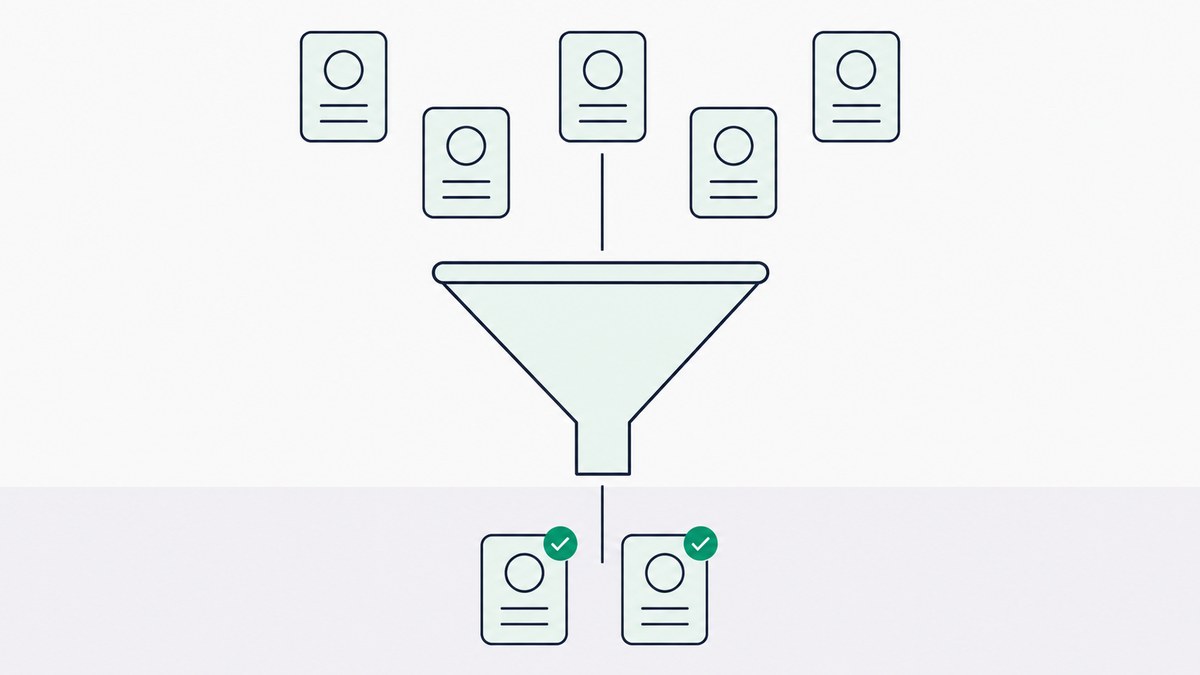
What is in this guide
If you're screening 500 applicants for 20 openings, or running a single campus hiring drive once a semester, the mechanics of doing this well are largely the same. This guide covers how to build one, when to use it instead of (or alongside) resume screening, how to review potential integrity risks without turning the process into an interrogation, and what to actually look for in a platform. If you want to go deeper on any single piece, jump to How to Create an Online Assessment for Recruitment or How to Reduce Cheating in Remote Hiring Tests for the sections most teams ask about first.
What Is a Pre-Employment Assessment?
"Pre-employment assessment" and "online assessment for recruitment" are used almost interchangeably, but the former is really a specific category within the broader practice - a test administered before an offer is made, typically to screen or rank candidates rather than to evaluate someone already hired.
Pre-employment assessments generally fall into a few types:
The category a recruiter reaches for depends heavily on the role. A BPO hiring for phone support might lean on a knowledge-and-scenario MCQ test; a manufacturing company hiring for a regulated role might prioritize a compliance-knowledge check. For a full breakdown of this specific category and how it differs from other assessment types, read What Is a Pre-Employment Assessment?
- Skills and knowledge tests - measuring specific competencies relevant to the role (software proficiency, technical concepts, industry regulations)
- Cognitive ability tests - general reasoning, numerical, and verbal aptitude
- Personality and behavioral assessments - work style and fit indicators, used cautiously and usually alongside other signals
- Job-simulation tasks - a scenario-based exercise mimicking real work the role involves
How to Create an Online Assessment for Recruitment
Building a test that actually predicts job performance takes more thought than typing out twenty questions the night before a hiring push, but it doesn't need to take weeks either.
A test built directly from the job's real requirements is also easier to defend later - if a candidate or a regulator ever asks why someone was screened out, "this measured a skill the role explicitly requires" holds up in a way "we always use this generic test" doesn't. For the full step-by-step process, read How to Create an Online Assessment for Recruitment
- Start from the job description, not a generic template - pull the specific skills and knowledge the role actually requires, not a broad "general aptitude" set
- Mix question types deliberately - multiple-choice questions grade instantly and scale well; written responses capture reasoning MCQs can't, at the cost of needing review
- Set a pass mark tied to the role's actual bar, not an arbitrary round number
- Randomize question and option order so candidates taking the test at different times can't easily share answers
- Build it once, then duplicate it for every future opening in the same role, rather than rebuilding from scratch each hiring cycle
How to Assess Candidates Remotely
Remote assessment removes geography as a hiring constraint, but it introduces a different set of problems - verifying who's actually taking the test, keeping the experience smooth on the candidate's end, and making results genuinely comparable across a large pool.
Remote assessment at scale is really a logistics problem wearing a technology costume - most of what makes it work well is the same discipline that makes any high-volume hiring process work, just applied to a different tool. Full details in How to Assess Candidates Remotely
- Identity verification matters more than it seems - an email OTP or similar check ties a specific score to the person you invited, which matters the moment a shortlist gets challenged
- Give candidates flexibility in when they test, within a window, rather than forcing a single fixed time across time zones
- Keep the experience frictionless - no software installs, autosaved answers in case a connection drops, and accessibility considerations (larger text, break options) so the test measures skill, not tech tolerance
- Centralize results as they come in, so your team can move candidates through a pipeline (started → reviewed → shortlisted) without spreadsheets multiplying across five people's inboxes
Online Assessment vs Resume Screening
Resumes and online assessments aren't really competitors - they measure different things, but a lot of teams default to resume screening alone simply because it's the process they've always used, not because it's the better signal for the role.
Neither replaces the other entirely - a resume still tells you about trajectory and experience an assessment can't capture, and an assessment tells you about actual capability a resume can only imply. Most well-run pipelines use resume screening for an initial pass and an assessment to validate the shortlist before interviews. Full comparison in Online Assessment vs Resume Screening
How to Reduce Cheating in Remote Hiring Tests
The moment you take a test remotely, you lose the built-in integrity of a room with a proctor walking the aisles, and for hiring specifically, the stakes of getting fooled are different from an academic exam. A score influenced by unauthorized help may misrepresent a candidate’s ability to do the job. Review the evidence before making that judgement.
TunnelQuiz builds this detection directly into the test itself - tab and focus alerts, second-screen detection, fullscreen lock, copy-paste blocking, and developer-tools-open detection all flag automatically, with high-risk sessions surfaced without your team having to manually review every attempt. Full breakdown in How to Reduce Cheating in Remote Hiring Tests
- Detect, don't just deter - tab-switch alerts, second-screen detection, and copy-paste blocking catch the most common attempts in real time rather than relying on candidates simply behaving honestly
- Verify identity before scoring means anything - a face photo check and OTP verification confirm the person who tested is the person who gets the offer
- Watch for patterns, not single events - one brief tab switch rarely means much; repeated switching correlated with harder questions tells a different story
- Decide your risk tolerance per role - a high-stakes technical hire might warrant live monitoring; a high-volume retail screening might not need that level of scrutiny
How to Build a Technical Assessment for Developers
Technical hiring assessments cover a wider range than people often assume. Live coding challenges are one form, but concept, syntax, and debugging-recognition questions delivered as structured multiple-choice or written-response items are a legitimate and widely used approach, particularly for an early screening round before a deeper technical interview.
Worth being direct about here: a platform like TunnelQuiz is built for MCQ and written-answer testing with proctoring, plus coding questions on Pro that AI reads and marks without running the code. It is not a live coding-execution environment; it's the right tool for the concept-and-fundamentals screening layer, not for replacing a hands-on coding interview entirely. Full guide in How to Build a Technical Assessment for Developers
- Screen concepts before you screen coding style - MCQ-based questions on language fundamentals, data structures, and common debugging scenarios filter out candidates who can't clear a baseline before you spend interviewer time on a live coding round
- Use negative marking carefully - it discourages guessing on technical questions where partial knowledge is common, but calibrate it so it doesn't punish reasonable uncertainty too harshly
- Randomize the question bank per candidate - technical questions circulate on forums and prep sites more than almost any other category, so a static test degrades in value quickly
- Pair with, don't replace, a live technical round - a structured MCQ or written assessment is an efficient first filter, not a substitute for watching someone actually reason through a problem
What to Look for in an Online Assessment Platform
Once you've decided to use online assessments, the platform choice determines whether the process actually saves your team time or just adds a new tool to manage.
This is close to a checklist of what TunnelQuiz was built around specifically for hiring use cases - shuffled questions per candidate, instant auto-grading, a risk flag on high-risk attempts, and, from the Essential plan, a candidate board that takes you from "test submitted" to "shortlisted" without a spreadsheet in between.
- Proctoring that actually detects, not just records - tab/focus alerts, second-screen detection, copy-paste blocking, and fullscreen lock catch issues as they happen rather than leaving you to review hours of footage after the fact
- Question flexibility - multiple-choice for instant scoring, written responses for reasoning, negative marking where guessing is a concern
- No-install candidate experience - anything requiring a download or lockdown browser install adds drop-off, especially for high-volume or campus hiring where candidates are testing from shared or older machines
- Identity checks built in - an email OTP, plus a check-in photo and webcam snapshots on paid plans, tie results to the person you invited without adding a separate step your team manages manually
- Pipeline and comparison tools - a candidate board to move people from started to shortlisted, and a side-by-side comparison view, turn raw scores into an actual shortlisting decision
- Reusable tests - building a strong test once per role and reusing it for every future opening saves far more time than most teams expect
Common Mistakes in Recruitment Testing
A few patterns show up repeatedly in teams that try online assessments and end up disappointed with the results, usually not because testing doesn't work, but because of how it was implemented.
- Testing everything, for every role - a 45-minute assessment for an entry-level role with 300 applicants creates enormous drop-off; match test length and depth to the role's actual stakes
- Reusing one generic test across unrelated roles - a test built for one job rarely measures what a different job actually needs
- Ignoring candidate experience - a clunky, install-required test with no save-and-resume function loses good candidates before they even finish, regardless of how good your questions are
- Treating a flagged attempt as an automatic disqualification - proctoring flags are a signal for review, not an automatic verdict; a full explanation matters as much here as it does in academic proctoring
- Over-indexing on the score alone - an assessment is a strong signal, not the only one; pairing it with a structured interview still catches things a test can't measure
Questions, answered
An online assessment in recruitment is a remotely administered test, typically multiple-choice, written-response, or both, used to measure a candidate's job-relevant skills or knowledge before an interview or offer. It replaces or supplements resume screening with a direct, comparable measure of ability rather than claimed experience.
They measure different things rather than one being categorically better - assessments give a consistent, comparable measure of specific skills, while interviews capture communication, judgment, and fit that a test can't fully assess. Most effective hiring processes use both together rather than choosing one over the other.
Assessment length should match the role's stakes and the applicant volume - a high-volume entry-level screen typically works best under 20-30 minutes, while a technical or senior-role assessment can reasonably run longer. Longer tests generally increase candidate drop-off, so length should be a deliberate choice, not a default.
They can, when questions are well-designed and scored consistently, since they reduce reliance on subjective signals like school prestige or resume formatting that resume screening is prone to. They aren't automatically unbiased, though - poorly designed questions or an inaccessible test format can introduce their own bias.
It depends on the platform - some require a lockdown browser or dedicated software installation, while others run entirely in a standard web browser with no download required. A no-install experience generally reduces candidate drop-off, particularly for high-volume or campus hiring.
A combination of identity verification, real-time detection (tab-switch alerts, second-screen detection, copy-paste blocking), and human review of flagged attempts is the standard approach, rather than relying on any single method alone. The goal is catching a pattern of suspicious behavior, not treating every minor flag as proof of cheating.
A skills test is one specific type of pre-employment assessment, focused narrowly on a demonstrable ability like coding, writing, or a software tool. "Pre-employment assessment" is the broader category, which also includes cognitive ability tests, behavioral assessments, and job-simulation exercises.
If you're setting this up for the first time, TunnelQuiz lets you build a proctored MCQ or written-answer test, share a single link or, from the Essential plan, send bulk invites, and see auto-graded results next to a risk flag for every attempt, with unproctored assessments free and unlimited on paid plans (on the free plan each attempt still uses a credit) if you want to test the waters before turning proctoring on for a higher-stakes round.
- Free plan, 50 credits a month
- No install, runs in the browser
- Screen capture on every plan
- MCQs scored the moment they submit