How to reduce cheating in remote hiring tests
In hiring, a candidate who cheats through a test is about to be hired for a job they may not be able to do. Detection, identity, patterns and risk tolerance.
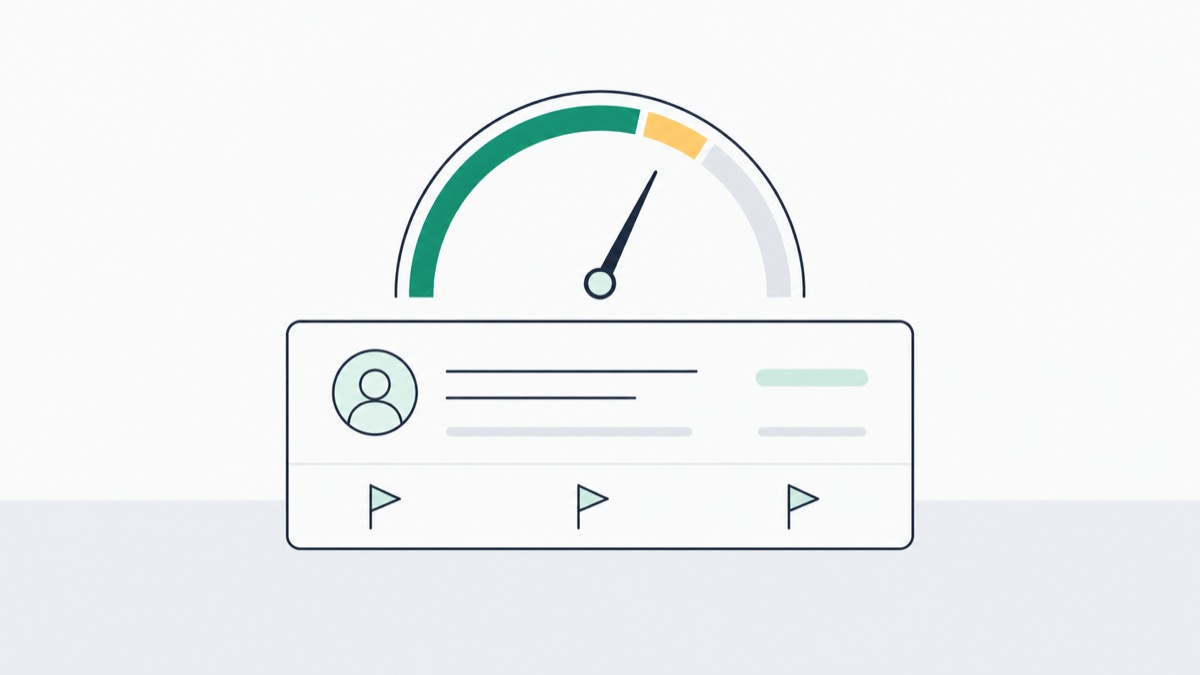
In short
The stakes differ from an academic exam: someone who games the score is about to be hired for work they may not be able to do.
Reducing cheating in remote hiring tests comes down to three layers working together: verifying the candidate's identity so the right person is actually being tested, using real-time detection to catch the most common shortcuts as they happen, and designing the test itself to be harder to cheat on regardless of monitoring. No single layer catches everything - teams that rely only on detection technology still get fooled by problems the test design should have prevented in the first place.
For hiring specifically, the stakes of missing this are different from an academic exam: a candidate who cheats their way past a skills test isn't just gaming a score - they're about to be handed a job they may not actually be able to do. This guide covers practical steps across all three layers. For the broader process of building the assessment itself, see our complete guide to online assessment for recruitment.
Why This Matters More in Hiring Than in Other Contexts
A failed exam has consequences mostly for the student. A candidate who cheats through a hiring assessment and gets the job creates consequences for the whole team - a bad hire is expensive to unwind, and the cost compounds the longer it takes to notice the skills gap the test was supposed to catch.
This is worth keeping in mind when deciding how much effort to put into integrity measures: the value of reviewing integrity risks early in hiring is generally higher than the equivalent effort in a lower-stakes academic quiz, simply because the downstream cost of getting it wrong is so much larger.
Verify Identity Before the Score Means Anything
A test result is only useful if you can trust it belongs to the person who applied. This is the foundation everything else builds on.
- Email OTP verification ties a specific test attempt to a specific, verified email address, closing the easiest form of impersonation
- A face photo check at the start confirms a real person is present and roughly matches who's expected, without requiring a full ID-scan process
- Periodic photo checks throughout longer assessments catch a substitution attempt that happens after the initial check, not just at the start
Identity verification isn't just about stopping a proxy test-taker outright - it also means that if a result is ever challenged or reviewed later, there's a clear record tying the score to a specific person.
Use Real-Time Detection for Common Shortcuts
Most cheating attempts on a remote hiring test fall into a small number of predictable categories, and detection technology exists specifically to catch these as they happen rather than relying on trust alone.
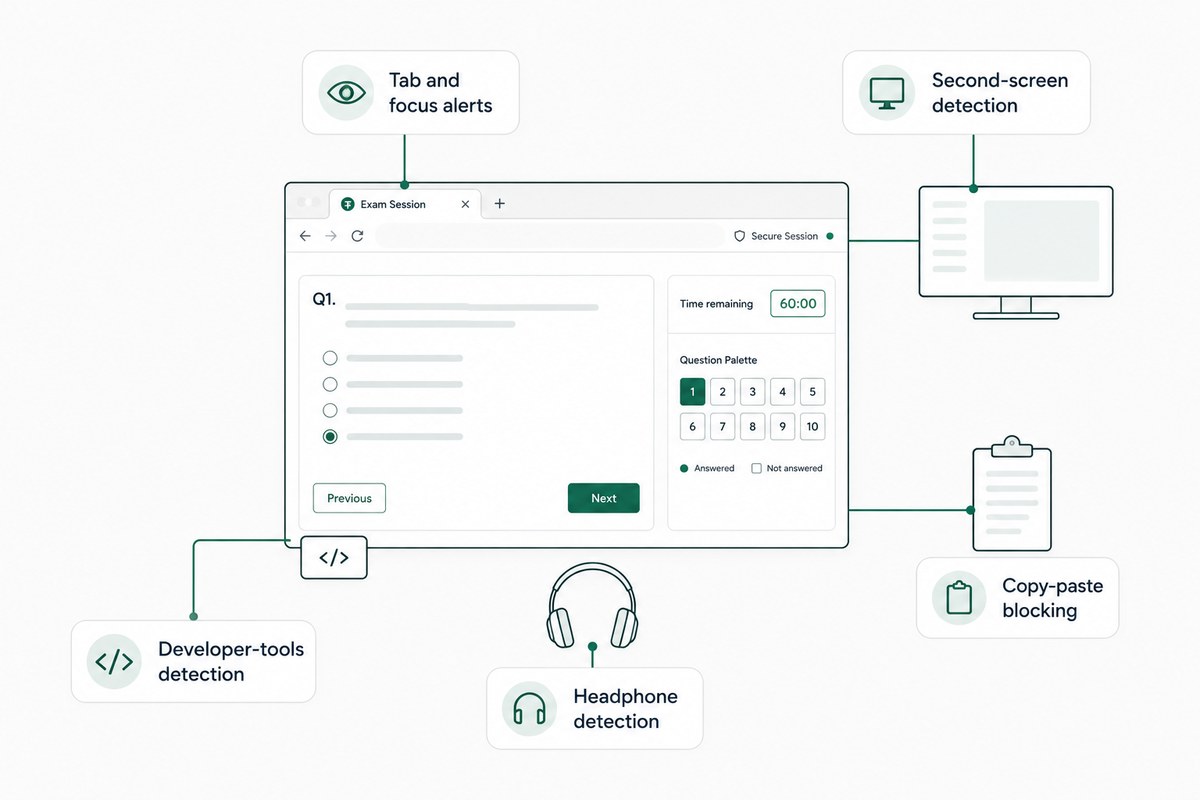
- Tab and focus alerts flag when a candidate leaves the test window, which is often someone searching for an answer in another tab
- Second-screen detection catches a second monitor being used to display notes or search results out of camera view
- Copy-paste blocking stops candidates from pulling answers directly from an external source rather than typing their own response
- Developer-tools detection flags an attempt to inspect or manipulate the test page itself, a less common but real technical workaround
- Headphone detection can flag a heads-up worth a closer look, since it sometimes correlates with a candidate receiving live audio assistance
TunnelQuiz builds all of these into the test itself: tab and focus alerts, second-screen detection, copy-paste blocking, and developer-tools alerts flag automatically the moment they're triggered, with high-risk attempts surfaced for review rather than requiring your team to watch every session manually.
Design the Test to Resist Cheating on Its Own
Detection catches attempts as they happen, but a well-designed test reduces the incentive and opportunity to try in the first place.
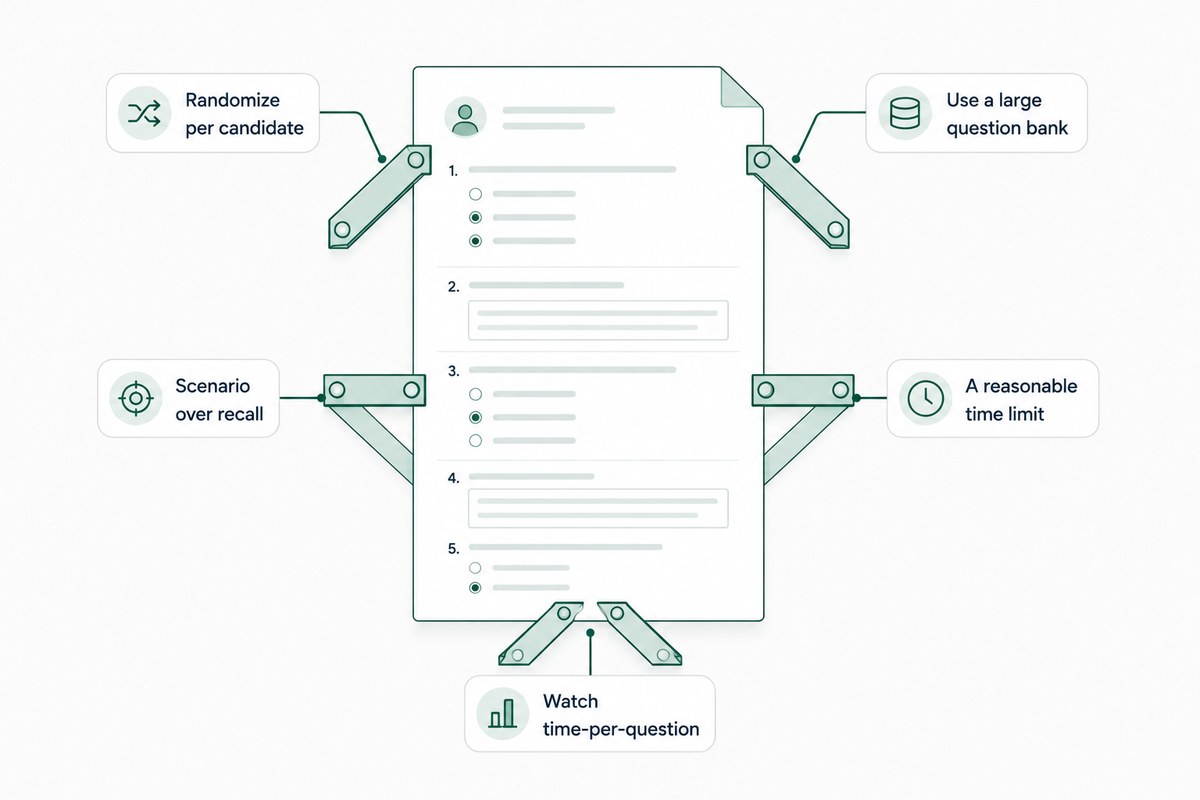
- Randomize question and answer order per candidate so answers can't be shared by position, and so the same test doesn't circulate identically across a hiring cycle
- Use a large enough question bank that no two candidates see an identical test, which also protects the test's long-term value if questions leak
- Favor scenario and application-based questions over pure recall - a question that requires reasoning through a specific situation is much harder to look up verbatim than a fact-based question
- Set a reasonable but not overly generous time limit - enough time to demonstrate real knowledge, not enough to comfortably search for every answer
- Watch time-per-question data, if your platform reports it - an unusually long pause on a specific question is a more useful signal than total time alone
A test built this way stays useful longer, since it degrades much more slowly even as it circulates among candidates over multiple hiring cycles.
Don't Treat Every Flag as an Automatic Disqualification
This is the step teams most often get wrong, and it undermines trust in the whole process when they do.
- Route every flag through human review before it affects a hiring decision - a flag is a signal to check, not a verdict
- Train reviewers on what a genuine false positive looks like - a glance away, a connectivity hiccup, or an accidental second-screen trigger from a work laptop shouldn't carry the same weight as a sustained pattern
- Look for patterns, not isolated events - one short tab switch means far less than repeated switching correlated with the hardest questions
A candidate wrongly flagged and automatically rejected without review isn't just an unfair outcome - it's also a lost candidate who might have been your strongest hire, filtered out by a false positive nobody checked.
The Newer Problem: AI-Assisted Cheating
Beyond the traditional cheating methods, remote hiring tests now face a newer category: candidates using AI chatbots, hidden overlays, or real-time prompting tools to generate answers during the test itself. This is a genuinely evolving problem, and no single tactic solves it completely yet.
- Scenario-specific and role-relevant questions are harder for generic AI tools to answer convincingly than fact-recall questions, since they require applying knowledge to a specific, less generic context
- Unusual response timing patterns - answers appearing unnaturally quickly and uniformly across questions of very different difficulty can be a signal worth reviewing
- Combining a written-response component with a live interview follow-up lets you probe whether a candidate can actually explain the reasoning behind an answer they submitted, which is much harder to fake convincingly than the original answer
Treat this as an area to keep revisiting as detection methods and cheating tactics both continue to evolve, rather than something a one-time policy change fully solves.
The Short Version
Reducing cheating in remote hiring tests works best as layered protection - identity verification to confirm who's testing, real-time detection to catch common shortcuts as they happen, and test design that resists cheating even without monitoring. Handling flagged attempts fairly matters just as much as catching them, and AI-assisted cheating is a newer challenge worth watching rather than something fully solved by any single tactic today.
Frequently asked questions
What is the most effective way to prevent cheating in remote hiring tests?
No single method is fully effective on its own - combining identity verification, real-time detection (tab-switch and second-screen alerts, copy-paste blocking), and thoughtful test design creates layered protection that's much harder to get around than any single measure. Teams relying on just one layer tend to catch far less than they assume.
Can candidates use AI tools to cheat on remote hiring tests?
Yes, and it's an evolving challenge. Scenario-specific questions that require applying knowledge to a particular context are harder for generic AI tools to answer convincingly than fact-recall questions. Pairing a written assessment with a live follow-up discussion is currently one of the more effective ways to verify genuine understanding.
Does tab switching automatically disqualify a candidate?
No, a single, brief tab switch is typically logged as a flag for review, not an automatic disqualification, since legitimate reasons for a momentary switch exist. Reviewers generally look for repeated switching or patterns correlated with harder questions before treating it as a genuine concern.
How does identity verification prevent cheating in hiring tests?
Identity verification, such as email OTP and a face photo check, ties the attempt to the inbox you invited and puts a face on record, which makes proxy test-taking much harder to get away with. It also leaves a clear record of who sat the test if a result is ever challenged.
Should every hiring test use full proctoring?
Not necessarily - the right level of monitoring should match the role's stakes, with high-stakes or technical roles warranting closer scrutiny than a high-volume, lower-stakes screening test. Applying the same intensity of monitoring to every assessment regardless of stakes tends to add friction without a proportional integrity benefit.