How does AI proctoring detect cheating?
AI proctoring pattern-matches against normal test-taking behaviour and flags deviations for a human to judge. Here are the signals it uses, and where it gets things wrong.
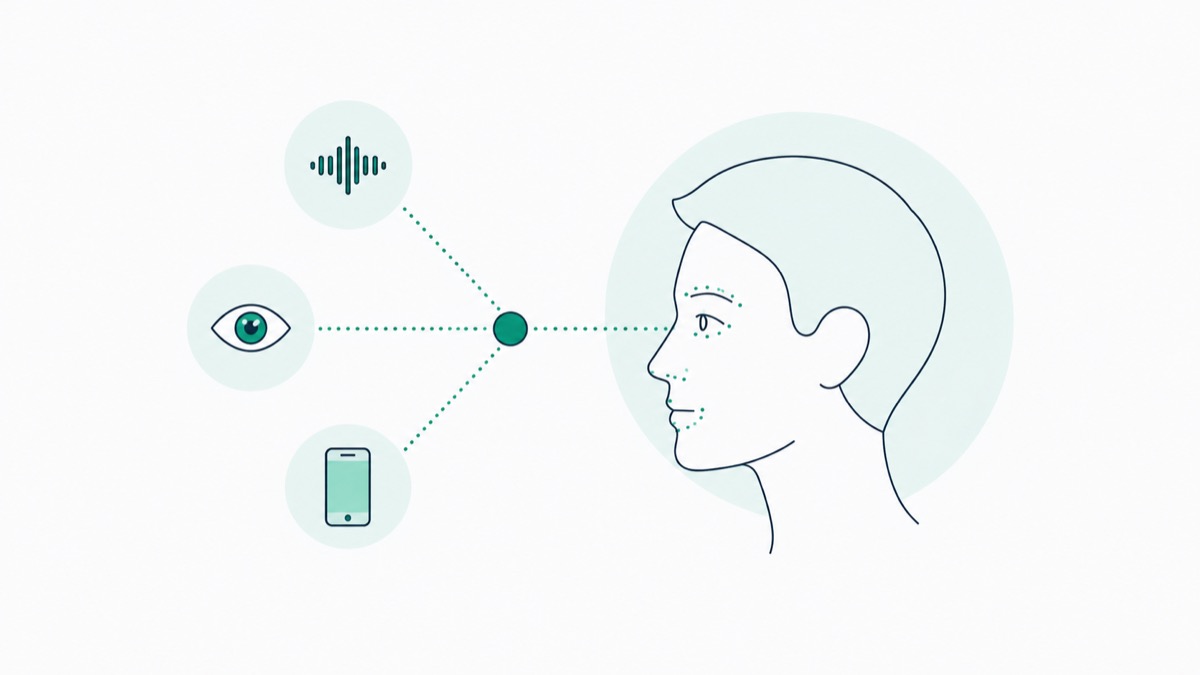
In short
The six signals AI actually watches, and an honest look at why false positives are part of the deal rather than a bug to be fixed.
AI proctoring flags unusual activity by continuously analyzing webcam, screen, and audio data for patterns that deviate from normal test-taking behavior, then flagging those moments for a human to review rather than deciding on its own that someone cheated. The "AI" part isn't making judgment calls - it's doing pattern recognition at a scale no human proctor could manage alone, and handing off anything unusual to a person.
That distinction matters more than most explanations give it credit for. This article breaks down exactly what the AI is looking at, how it tells the difference between normal human behavior and something worth flagging, and where the technology genuinely struggles.
AI Proctoring Doesn't Decide - It Flags
The single biggest misconception about AI proctoring is that the software itself determines guilt. In almost every modern system, it doesn't. The AI produces a report of unusual moments, ranked by how confident the system is that something worth looking at happened. A human, an instructor, a review team, or in blended setups, a live proctor pulled in mid-exam, makes the actual call.
This is a deliberate design choice, not a limitation the industry hasn't gotten around to fixing. Letting software issue automatic penalties based on a single flagged moment would produce far more false accusations than it would prevent actual cheating.
The Core Signals AI Proctoring Analyzes
AI proctoring systems don't rely on one indicator, they combine several data streams at once, which makes it harder to get around detection by only avoiding one type of behavior.
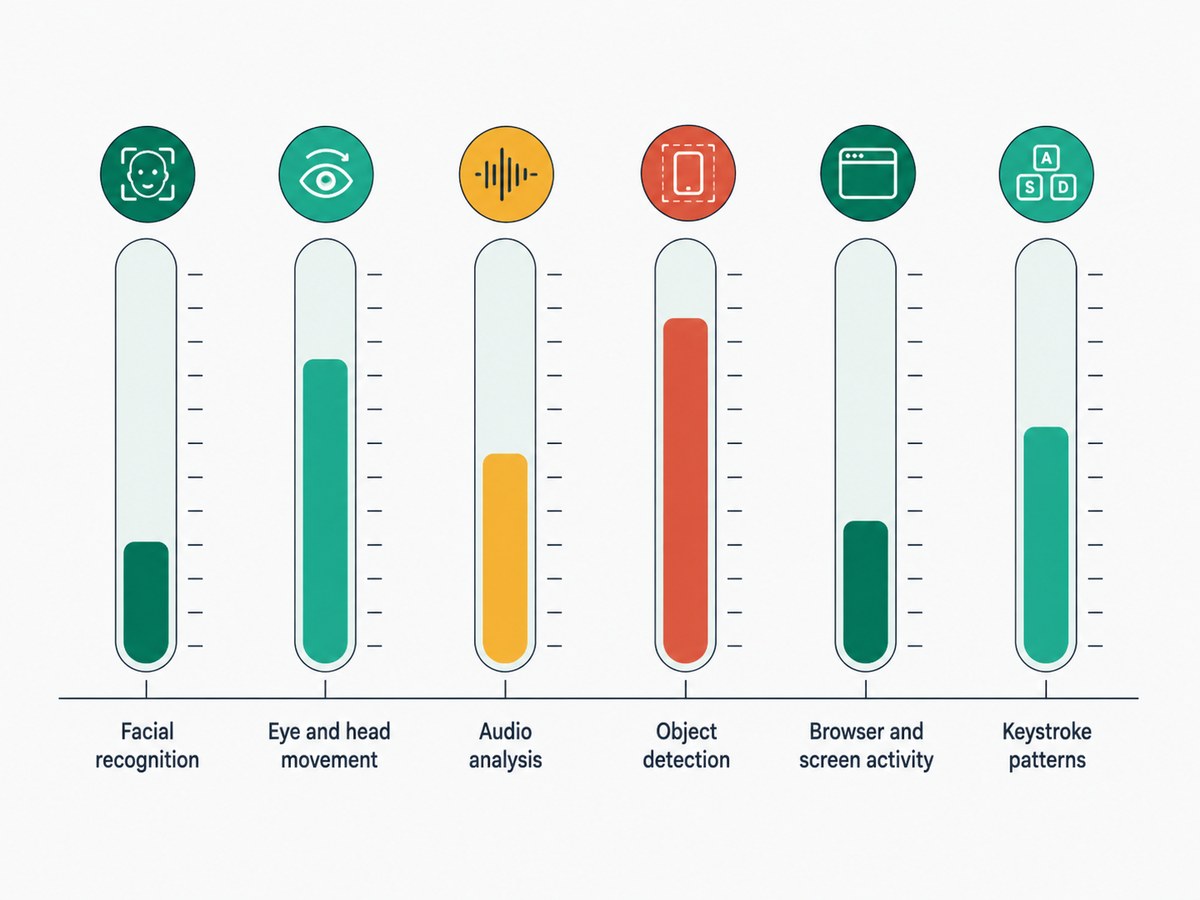
- Facial recognition and identity matching - confirms the person taking the exam matches the ID submitted at check-in, and continues checking periodically throughout the session
- Eye and head movement tracking - flags repeated glances in the same direction at consistent intervals, which reads differently than a one-off distraction
- Audio analysis - detects a second voice, whispering, or background conversation that shouldn't be present
- Object and environment detection - computer vision scans the frame for phones, notes, books, or a second person entering view
- Browser and screen activity - tracks tab switches, new application launches, or attempts to access unauthorized resources
- Keystroke and interaction patterns - in some systems, typing rhythm and mouse behavior are compared against what's typical for that test-taker
None of these signals alone triggers a violation. It's the combination and repetition that the system is actually weighing.
Why a Single Glance Away Doesn't Trigger a Flag
A common worry students raise is: "What if I just look away to think, and it flags me?" Well-built systems are specifically designed not to react to that.
- Brief, one-off distractions - looking at a clock, adjusting posture, a moment of thought, are treated as normal human behavior
- The system becomes more interested when the same action repeats in a consistent pattern, like glancing toward the same spot every few seconds
- Isolated events are logged but weighted low; repeated or clustered events raise the flag's priority for review
This is also where the technology has real limits. A student with a tic, a visual impairment, or an anxiety-related movement pattern can still trigger repeated flags even though nothing dishonest is happening, which is exactly why the human review step isn't optional in a well-run system.
Red Flags vs. Orange Flags
Many platforms classify what they detect into rough tiers rather than treating every flag identically:
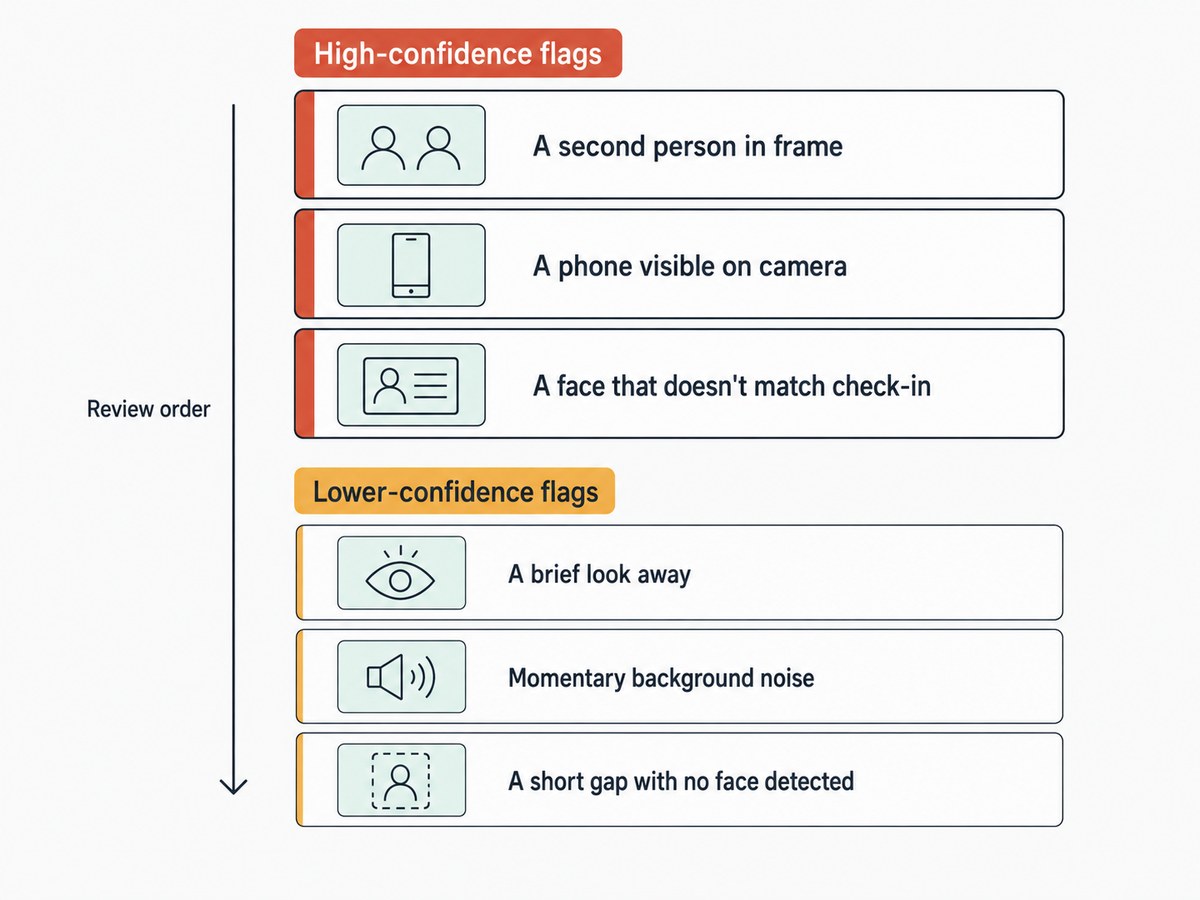
- High-confidence flags - a second person clearly visible, a phone in frame, a different face than the one verified at check-in
- Lower-confidence flags - brief looking away, momentary background noise, a short window with no face detected
This tiering exists so reviewers can prioritize their time, a session with several high-confidence flags gets looked at before one with a single low-confidence flag. TunnelQuiz gives each attempt a risk score so reviewers can start with the riskiest sessions, rather than treating every flagged session as equally serious.
What AI Proctoring Struggles With
It's worth being direct about this rather than presenting the technology as flawless.
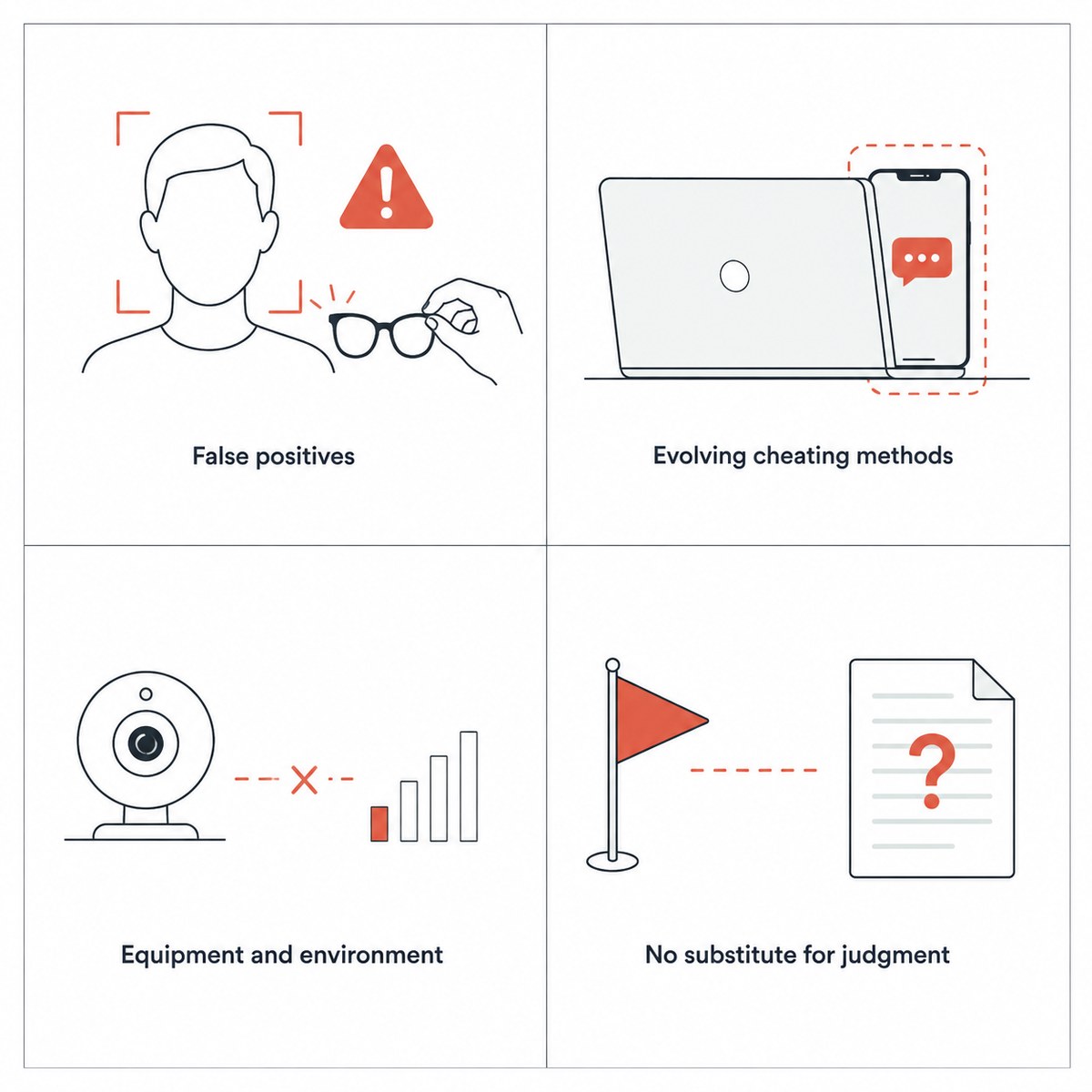
- False positives - legitimate behavior (poor lighting, a pet walking by, a disability-related movement) can resemble a flagged pattern
- Evolving cheating methods - as generative AI tools become easier to access, some test-takers attempt to use AI-assisted answers or synthetic audio/video, which pushes detection systems to evolve faster than static rule-based checks ever could
- Equipment and environment dependence - poor camera quality, bad lighting, or an unstable internet connection can degrade how reliably the system reads behavior at all
- No substitute for judgment - the AI can tell you something looks unusual; it can't tell you why, which is still a human's job
This is a big part of why the technology and prevention discussion connects to two related and highly specific detection questions: how systems catch a second connected screen and how tab switching specifically gets logged. Both are subsets of the same behavioral monitoring layer described above.
How This Fits Into the Bigger Security Picture
AI detection is one layer of a larger system, not the whole security model. It works alongside identity verification, browser lockdown, and in well-designed programs, a genuine human review and appeals process. For a full look at how these pieces come together and what "secure" actually means in this context, read Are Online Proctored Exams Secure? And if you're an instructor or administrator thinking about how to reduce cheating attempts in the first place rather than just catching them, see How to Prevent Cheating in Online Exams.
Conclusion
AI proctoring flags unusual activity by analyzing facial recognition, eye movement, audio, and browser activity together, weighing repetition and pattern rather than single moments, and handing anything suspicious to a human for the actual decision. It's a genuinely useful triage layer, but it has real limitations, false positives, evolving cheating methods, and no substitute for human judgment. For the rest of the cluster, including prevention strategies and security details, our complete guide to online exam proctoring covers it all.
Frequently asked questions
Can AI proctoring tell the difference between cheating and normal behavior?
Yes, to a significant degree, modern systems weigh repetition and pattern over isolated moments, so a single glance away or brief noise typically won't trigger a serious flag on its own. It's still an imperfect process, which is why flagged moments are reviewed by a human before any consequence is applied.
Does AI proctoring use facial recognition?
Yes, facial recognition is used at check-in to match the test-taker against their submitted ID, and many systems continue periodic face checks throughout the exam to confirm the same person remains in frame. This is separate from continuous identity tracking of anyone other than the enrolled test-taker.
Can AI proctoring detect someone using another device to search for answers?
Often, yes, if that device is visible in frame or if a connected second screen is detected at the system level, but a fully separate offline device outside camera view is harder for AI alone to catch. This is one of the acknowledged limitations of AI-only detection, which is why layered approaches combining screen monitoring and room scans exist.
How accurate is AI proctoring at detecting cheating?
Accuracy varies significantly by vendor, exam conditions, and lighting or equipment quality, and no system claims to be error-free. This is precisely why flagged behavior is treated as a starting point for human review rather than an automatic finding.
Can AI proctoring detect AI-generated cheating, like using a chatbot for answers?
Detection is evolving specifically to address this, some systems now watch for behavioral patterns associated with reading generated text off-screen or unusual response timing, though this remains one of the harder problems in the field. It's an active area of development rather than a fully solved one.