Skill Validation Platform to Test, Verify, and Measure Real Skills
TunnelQuiz is a skill validation platform that tests and verifies whether a person can actually do a skill. It uses standardized assessments, built-in integrity checks, and scored reports to replace resumes, job titles, and self-ratings with proof.
What is in this guide
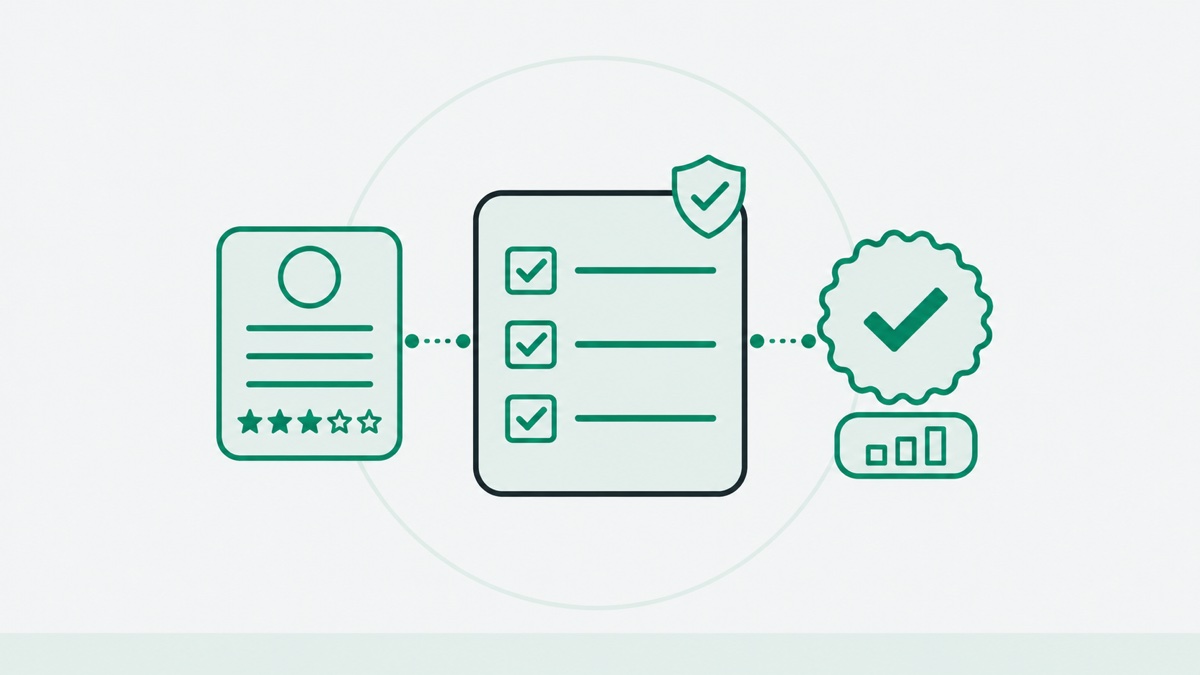
Under the hood, TunnelQuiz is a full online assessment platform. You build a test, invite people with one link, protect the session with integrity checks, and get an instantly scored report you can show to anyone who asks.
A skill validation platform turns "I know this" into proof you can compare and defend. Hiring teams, L&D managers, and certification bodies use it to validate skills before they hire, promote, train, or certify.
This guide covers how skill validation works, what to look for in a platform, and how to run your first test with TunnelQuiz.
What Is Skill Validation?
Skill validation is the process of proving that someone can do a skill, using evidence instead of claims. The evidence usually comes from a standardized test or task, scored against a clear standard.
Skills validation, skill validation, and skills verification are used almost interchangeably. Four related terms are worth separating:
- Skills assessment - the test or task that measures a skill. See our guide to skills assessment
- Skills validation - the assessment plus the proof around it: identity, integrity checks, consistent scoring, and a record of the result
- Skills verification - checking one specific claim, such as "I know SQL" on a resume
- Certification - a formal credential issued after someone passes an exam
In short, an assessment gives you a score. Validation gives you a score you can trust and defend.
Why Skill Validation Matters Now
Hiring and training decisions are only as good as the evidence behind them. Here is why more teams are moving to validated skills:
- Resumes are easy to polish - titles and self-ratings say little about real ability, and AI tools make polished applications easier to produce
- Skills-based hiring needs proof - employers who hire on skills need a fair, consistent way to compare people
- Skills change fast - a skill someone had two years ago may not match the job today
- Training needs evidence - without a before-and-after check, it is hard to know whether a course improved anything
- A wrong hire is costly - a short validation step early costs far less than a bad hire later
A skill validation platform makes all five easier, because the test, the scoring, and the record live in one place.
How a Skill Validation Platform Works
Most platforms follow the same simple flow. Here is how it works in TunnelQuiz:
- Define the skill and the standard - decide what "good" looks like for the role before you build anything. Reusable templates help you apply a proven standard every time
- Build the assessment - mix multiple-choice and written-answer questions, and add short coding questions or AI chat interviews where the role needs them
- Invite people - send one link, or use bulk invites and invite tracking for large groups
- Protect integrity - identity and monitoring checks such as email code verification, face photo checks, tab checks, and second-screen detection keep results trustworthy
- Score consistently - instant scoring handles objective questions, and AI grading can speed up written answers
- Report and decide - reports give you a clear record, and you can share them with hiring managers or trainers
- Re-validate over time - run the same assessment again later to track progress
What Skills Can You Validate?
Different skills need different test formats. A good platform lets you match the format to the skill.
- Job knowledge and concepts - multiple-choice questions on tools, terms, and processes
- Applied reasoning - scenario-based and written questions that show how someone thinks
- Written communication - emails, summaries or short responses scored with a rubric
- Short technical tasks - short coding questions for technical roles
- Conversation and judgment - AI chat interviews and situational questions
- Compliance and safety knowledge - pass-mark tests on policies and procedures
Skills that need hands-on or physical demonstration, such as a clinical procedure or a trade skill, still need a practical check. Online platforms are strongest at validating knowledge and applied reasoning at scale.
Key Features to Look for in a Skill Validation Platform
Not every tool that offers tests can validate skills. Look for these six things:
- Role-aligned tests and reusable templates - build once, then reuse the same standard for every opening or cohort
- Consistent scoring - instant scoring, clear pass marks, and negative marking where guessing is a concern
- Integrity safeguards - identity checks, fullscreen enforcement, copy-paste blocking and live monitoring, matched to the stakes
- Evidence and reporting - clear reports and downloadable results you can show later
- A simple test-taker experience - no install, save and resume, and accessibility options
- Scale and teamwork - team roles, notes and a candidate board so reviewers stay in sync
You can see the full list on the TunnelQuiz features page.
Skill Validation Use Cases
The same platform supports several jobs across the talent lifecycle.
Hiring and Recruiting
Validate skills before the interview, so recruiters spend time only on people who can do the work. This is especially useful for high-volume hiring, where hundreds of applicants need the same fair check. Learn more about online assessment for recruitment.
Employee Development and Upskilling
Test a team against the target skill level for each role, turn the gaps into a training plan, then retest to see what improved. This gives L&D teams proof of impact, not just completion rates.
See how this works for corporate teams.
Internal Mobility and Promotions
Before filling a role from outside, check what your current people can already do. A consistent test gives managers a fair way to compare internal candidates.
Certification and Licensing
Credentials need stronger identity checks and records, because other people rely on the results. Learn more about online certification exams.
Campus and Education
Skill checks help colleges and recruiters evaluate large groups of early-career candidates fairly.
How to Choose a Skill Validation Platform
Ask these questions before you commit to any tool:
- What exactly does it measure - knowledge, applied reasoning, or hands-on tasks?
- Is the scoring consistent and easy to explain to a candidate?
- How does it protect against cheating, including AI-assisted answers?
- Can you keep a record of each result that you could show later?
- Is the experience simple for test-takers, with no downloads?
- Does it scale, and does the pricing fit your volume?
- Does the vendor say honestly what it cannot do?
Comparing options? Use these questions as a checklist, and ask every vendor, including us, to answer them in writing.
How TunnelQuiz Validates Skills
TunnelQuiz validates skills through browser-based tests that mix multiple-choice, written, short coding, and AI chat interview formats. Identity and integrity checks run during the test, and every result lands in a clear report.
Being direct about scope saves everyone time:
- Good fit - knowledge-based role tests, screening rounds, training checks, compliance tests, and certification-style exams
- Good fit - large groups, such as campus drives and high-volume hiring, where consistent scoring matters
- Not a fit on its own - skills that need physical demonstration or a specialized simulation environment, which need a practical check alongside the online test
TunnelQuiz has a free plan with 50 credits every month and no card needed, so you can pilot a skill validation test before you scale.
Get Started in 5 Steps
- Pick one role or skill to validate first
- List the five to ten topics that matter most and give each a weight
- Build the test from a template, or import your questions in bulk
- Pilot it with your own team, then send it to real candidates or employees
- Review the reports, adjust the pass mark, and run it again
Ready to try it? Start free with TunnelQuiz.
Questions, answered
A skill validation platform is software that tests and verifies whether people can do a skill, using standardized assessments, integrity checks, and scored reports. It replaces resumes and self-ratings with evidence you can compare and defend.
Skills validation is the process of proving that someone can perform a skill, using a scored test or task instead of a claim. It is used in hiring, training, promotion, and certification.
A skills assessment is a test that measures a skill. Skills validation adds the proof around it, such as identity checks, integrity safeguards, consistent scoring, and a record of the result.
Define the skill and the standard, build a test that matches the job, protect it with identity and integrity checks, score everyone the same way, and keep a record of the result. Repeat the test later to track progress.
Test employees against the target skill level for their role, compare the results, and turn the gaps into a training plan. Retest after training to see what improved.
Common methods are standardized tests, work-sample tasks, scenario-based questions, structured interviews scored with a rubric, and simulations. Most programs combine two methods instead of relying on one.
It replaces guesswork with evidence, which helps you hire fairly, find skill gaps, and show whether training worked. It also gives candidates and employees a clear, consistent standard.
Look for role-aligned tests, reusable templates, consistent scoring, identity and integrity checks, clear reports, and a simple no-install experience for test-takers. Scale features such as bulk invites matter for large groups.
Combine good question design with integrity checks such as identity verification, tab and second-screen detection, copy-paste blocking, and human review of flagged sessions. No single control is enough, because a determined person can still use a device outside the test.
No. Validation checks whether someone can do a skill. Certification is a formal credential issued after someone passes an exam, and it usually needs stricter identity checks and record-keeping.
Yes. Test before training to find gaps, then test again after to see what changed. This shows whether a training program actually improved skills.
It depends on how fast the skill changes. Fast-moving technical skills may need a check every 6 to 12 months, while stable skills may need one only when someone changes roles.
TunnelQuiz validates knowledge-based and applied-reasoning skills through multiple-choice, written, short coding, and AI chat interview formats. Hands-on physical skills and specialized simulations need a different method alongside it.
Yes. TunnelQuiz has a free plan with 50 credits every month and no card needed, so you can run a pilot before you commit.
A skill validation platform proves what people can actually do, using standardized tests, integrity checks, and clear reports. It helps you hire fairly, find skill gaps, and show that training worked. TunnelQuiz gives you all of that in the browser, with nothing for test-takers to install.
- Free plan, 50 credits a month
- No install, runs in the browser
- Screen capture on every plan
- MCQs scored the moment they submit