How to run an online certification exam
A certification exam's output is a credential that must hold up long after the exam. Eligibility, defensible content, record-keeping and a retake policy.
In short
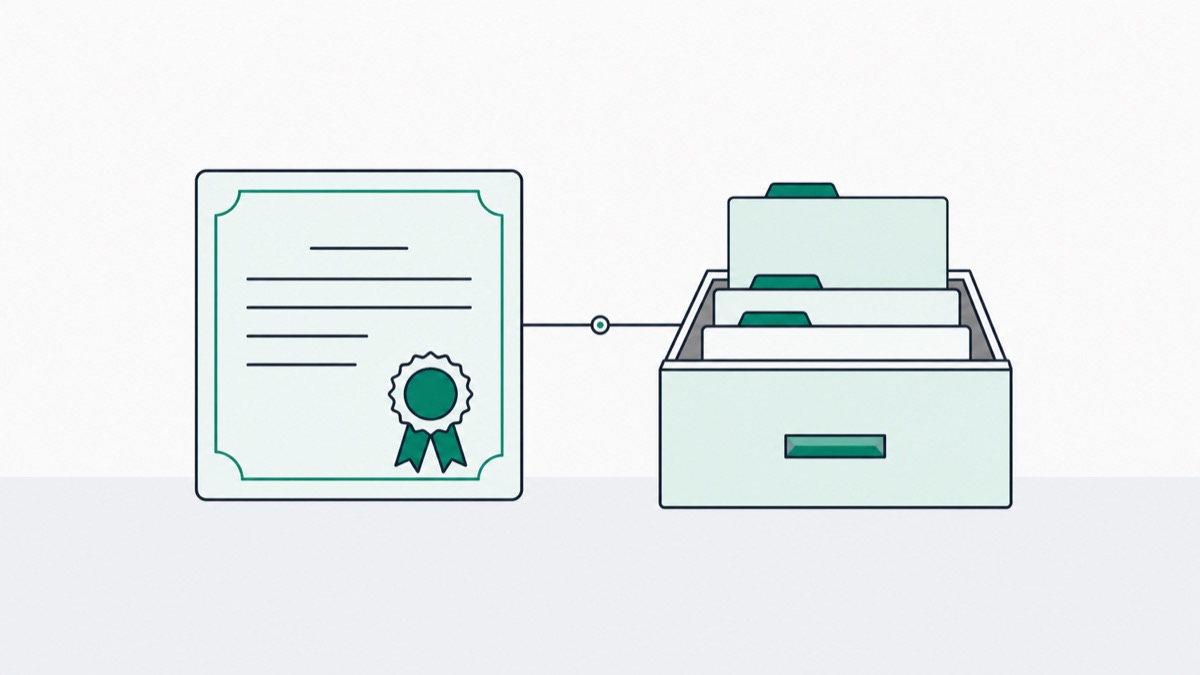
More moving parts than a course assessment, because the credential has to survive scrutiny long after exam day.
Running an online certification exam means managing the full lifecycle of a credentialing test, verifying candidate eligibility, building defensible exam content, delivering the exam reliably, and keeping an auditable record of results, not just picking a testing platform and going live. A certification exam produces something that outlives the exam day itself: a credential other people rely on, which means the process behind it needs to hold up to scrutiny long after candidates have logged off.
This guide walks through that full process in order. For the broader context on what makes certification exams different from a typical online test, see our complete guide to online certification exams.
Define Eligibility and the Application Process
Before a single candidate touches the exam, you need a clear, documented process for confirming who's actually allowed to take it.
- Set explicit prerequisites - required experience, prior coursework, or professional standing - and state them clearly during registration, not discovered partway through
- Require documentation upfront, not after the fact - transcripts, proof of experience, or membership status should be reviewed and confirmed before exam access is granted
- Build a review step into registration, even a lightweight one, so exam access isn't automatically granted the moment someone pays a fee
- Keep a record of eligibility decisions, including any exceptions granted, since this becomes part of the defensible trail behind every credential you issue
Skipping this step doesn't just create a fairness problem - it creates a real gap in your program's ability to defend a credential's legitimacy if it's ever formally questioned.
Build Exam Content That Holds Up to Scrutiny
Certification exam content needs a level of intentionality that a typical course quiz doesn't, because the exam is meant to certify a specific, defined set of competencies.
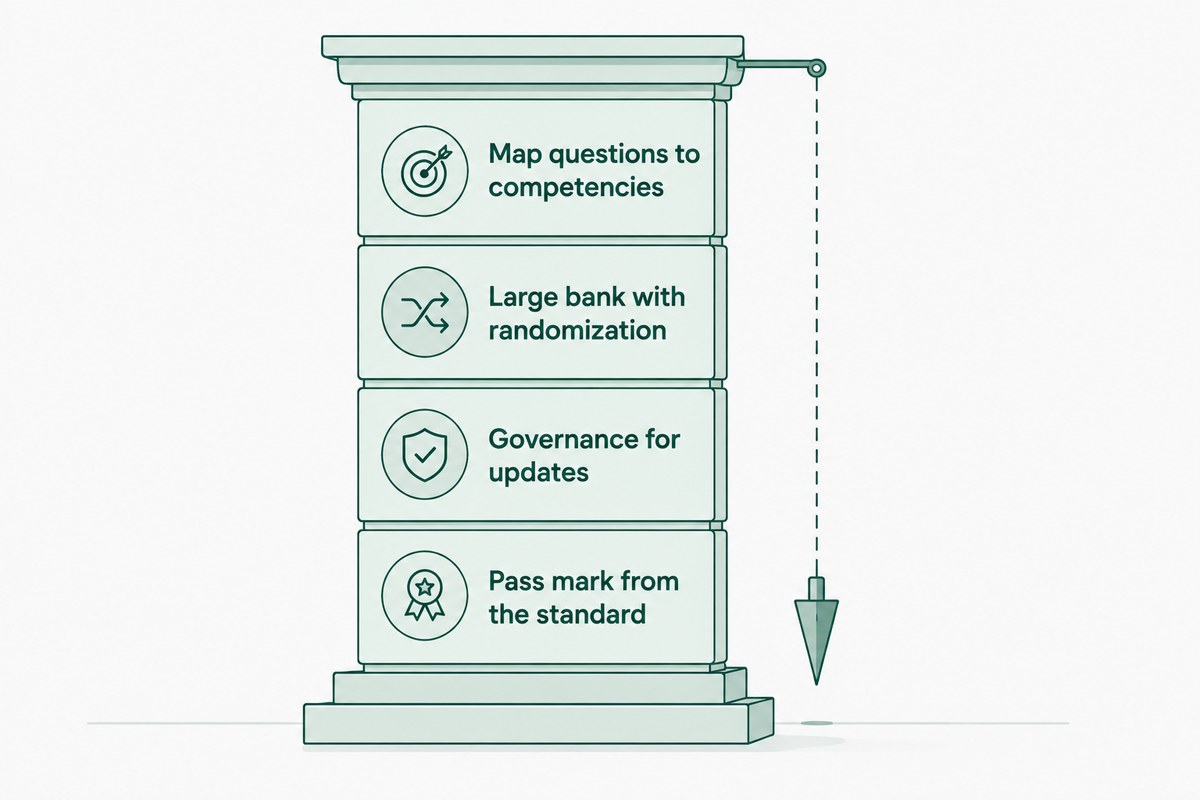
- Map every question to a documented competency, not a general sense of "things a certified professional should know" - this mapping is what you'd point to if a result or the exam itself were ever challenged
- Use a large enough question bank with randomization, so no two candidates see an identical exam, and the content's value doesn't erode as it circulates across administrations
- Establish a governance process for updating content - who can add or retire questions, and how changes get reviewed before going live
- Set the pass mark based on the competency standard, not on how a particular cohort happens to perform, so the bar stays consistent across exam cycles
Reusing a well-governed question bank across multiple exam windows saves real effort over rebuilding content each cycle. With TunnelQuiz, you can duplicate a proven certification exam for each new administration and update the copy, rather than reconstructing it from scratch every time.
Plan the Delivery Logistics
Delivery is where a lot of certification programs run into trouble simply from underestimating scale or timing.
- Decide on a scheduling model - a single fixed exam window, a rolling on-demand model, or scheduled sessions across a testing period - based on your candidate volume and how tightly results need to be reported
- Confirm technical requirements clearly in advance, including device, browser, and connectivity expectations, so candidates aren't troubleshooting on exam day
- Plan for candidate volume realistically - a program scaling from dozens to hundreds of candidates per window needs infrastructure and support capacity that a smaller pilot didn't require
- Build in a support channel for technical issues during the exam window, since a certification candidate stuck on a login problem has real stakes riding on getting it resolved quickly
Identity verification is a critical piece of delivery, but it deserves its own dedicated treatment rather than a few bullet points here - see How to Verify Candidates During Online Exams for the full breakdown of verification methods and how to calibrate rigor to your credential's stakes.
Decide on Proctoring Appropriate to the Stakes
Proctoring intensity for a certification exam should be a deliberate decision, not a default setting, and it's a big enough topic to deserve its own guide rather than a summary here.
The short version: a professional license with real-world implications generally warrants tighter monitoring than a lower-stakes internal certification, and your proctoring approach should be documented well enough to explain if a result is ever formally challenged. For the full breakdown of proctoring options and how to match them to certification stakes specifically, read How to Proctor Certification Exams Online
Score, Issue Results, and Keep Records
The exam isn't finished when a candidate submits it - what happens next determines whether the credential you issue can actually be trusted and verified later.
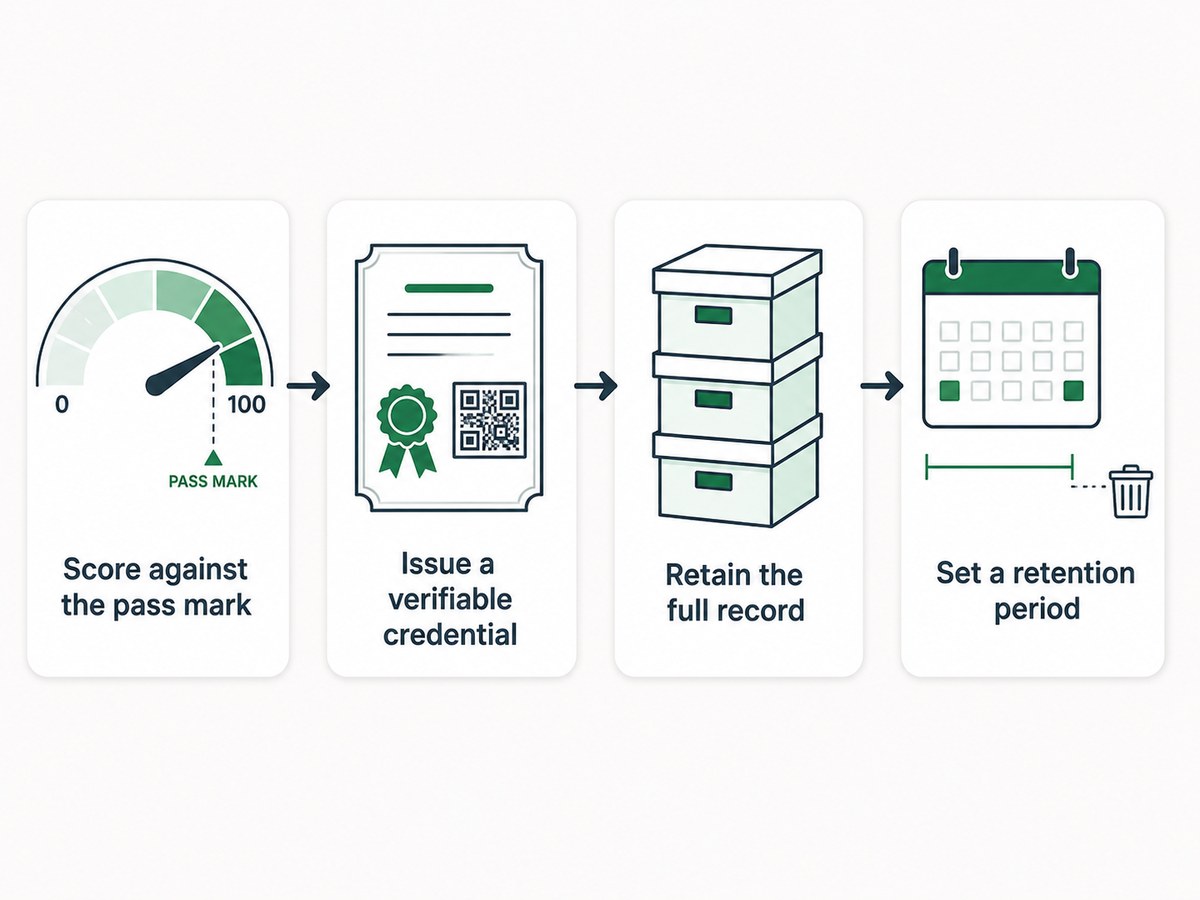
- Score consistently against the competency-based pass mark set during content design, not adjusted after seeing how a cohort performed
- Issue results with a clear, verifiable format - a credential number, issue date, and a way for third parties (employers, other institutions) to confirm authenticity when needed
- Retain a full record of the exam administration - who took it, when, their score, and how their identity was verified, since this is the trail that makes a credential defensible
- Set a clear retention period for records, aligned with how long the credential itself remains valid or how far back a challenge could reasonably occur
TunnelQuiz's instant auto-grading and, from Essential, shareable view-only results reports support this record-keeping directly, giving you a retained, referenceable record of each candidate's result without building a separate reporting system.
Handle Retakes and Disputes Fairly
A failed certification attempt carries more weight for a candidate than a failed course quiz, and your retake and dispute policy needs to reflect that.
- Set a clear retake policy in advance - how soon a candidate can retest, whether they see a new version of the exam, and any limits on total attempts
- Build a genuine appeals process, with a defined timeline, rather than handling disputes informally case by case
- Document every dispute and its resolution, since a pattern of disputes around a specific question or exam administration is valuable data for improving the program
- Communicate the policy before candidates ever take the exam, not only after someone fails and asks what happens next
A well-documented, consistently applied retake and appeals process protects both candidates and the certifying body - candidates know what to expect, and the program has a defensible record if a decision is ever questioned externally.
The Short Version
Running an online certification exam well means treating it as a full lifecycle: eligibility verification, defensible content, planned delivery, appropriate proctoring, careful record-keeping, and a fair retake and dispute process, not just a test candidates take once. Skipping any one of these steps creates a gap that becomes a real problem if a credential is ever formally questioned.
If you're setting this up, TunnelQuiz handles content governance by letting you duplicate a proven exam for each new administration, along with identity verification, auto-grading, and retained results reporting directly in the browser, covering much of the operational lifecycle without requiring you to piece together separate tools.
Frequently asked questions
What's the difference between running a certification exam and a regular exam?
A certification exam determines eligibility for a professional credential that others rely on, which requires a documented, auditable process from application through results, eligibility verification, competency-mapped content, and retained records. A regular course exam typically doesn't carry the same downstream legal or professional weight, so it doesn't require the same level of process rigor.
How long does it take to set up an online certification exam?
Timeline varies significantly based on how developed your exam content and eligibility criteria already are, but building a defensible process from scratch - content governance, eligibility review, delivery logistics, and record-keeping - typically takes longer than most organizations initially expect. Programs that skip steps to launch faster often end up retrofitting record-keeping and governance later, which is more work than building it in from the start.
What records should a certification body keep?
At minimum, a record of who took the exam, when, their result, how their identity was verified, and any dispute or appeal outcomes tied to that administration. This record should be retained for a period aligned with how long the credential remains valid, since credentials are often checked or challenged well after the exam date.
How often should certification exam content be updated?
Content should be reviewed and refreshed periodically, both to keep pace with evolving competency standards in the field and to reduce the risk of questions circulating widely after repeated use. There's no universal timeline - it depends on how fast the underlying field changes and how frequently the exam is administered.
Can a small organization run a certification exam without a large team?
Yes, with the right process and tools, a well-governed question bank, a clear eligibility and scoring process, and a platform that handles grading and record-keeping can let a small team run a credible certification program without a large administrative staff. The discipline of the process matters more than the size of the team running it.