Online proctoring vs live proctoring
AI proctoring scales cheaply across large cohorts; live proctoring puts a human in the room. A comparison across cost, scale, response speed and the concerns each raises.
In short
Neither is universally better. What actually decides it is exam stakes, cohort size and budget, and plenty of institutions run both.
Online proctoring and live proctoring both monitor remote exams for integrity, but they differ in who, or what is doing the watching: automated software analyzes behavior and flags anomalies for later review, while live proctoring puts a real human in the session watching in real time. The difference isn't just technical. It changes cost, scheduling, scalability, and how defensible your results are if a student challenges a flagged outcome.
This article compares both models directly so you can figure out which fits your exam, your budget, and your risk tolerance. For the broader concept both of these fall under, see our complete guide to online exam proctoring.
What Each Model Actually Means
It's easy to use "online proctoring" as a catch-all term, but the two models work quite differently in practice.
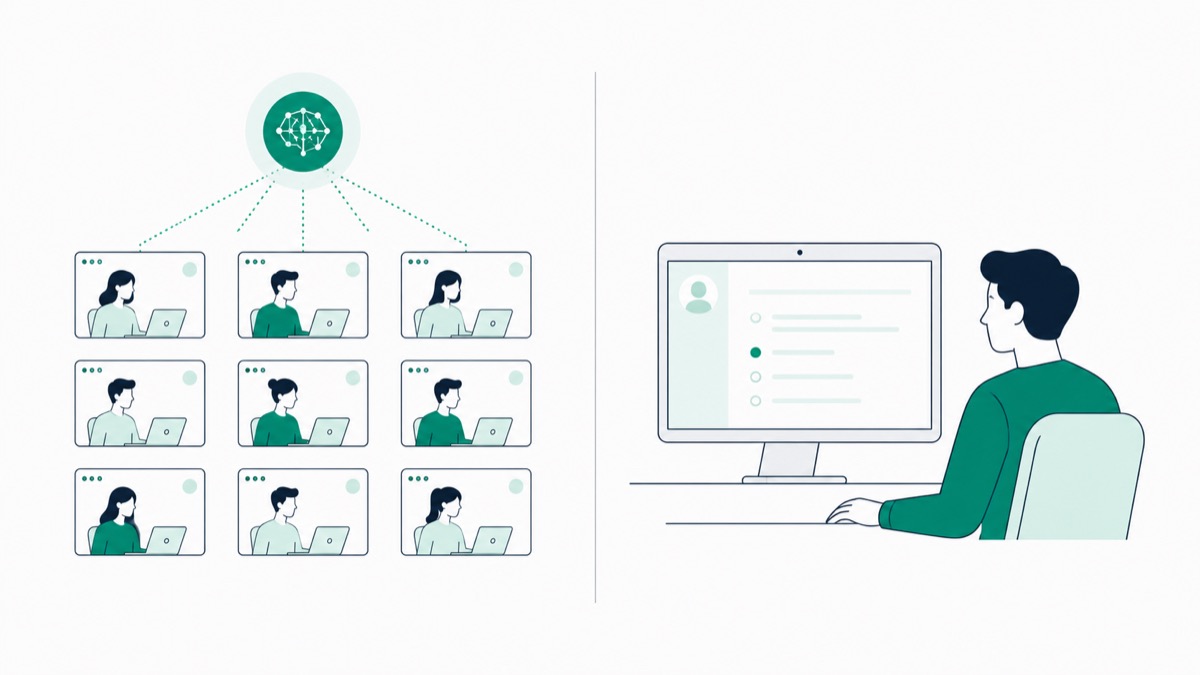
Automated (AI) proctoring - a student verifies their identity, then software monitors webcam, screen, and audio throughout the exam. Nothing is watched live. After the exam, the system compiles flagged moments into a report for someone to review.
Live proctoring - a trained human proctor watches the session as it happens, often monitoring several students at once across multiple video feeds. The proctor can intervene immediately, pausing the exam, asking a question, or ending the session, if something looks wrong.
Many programs don't strictly pick one or the other. A hybrid model uses AI to monitor continuously and pulls in a live proctor only when something gets flagged, combining the scale of automation with the judgment of a human at the moment it's actually needed.
Side-by-Side Comparison
| Factor | Automated (AI) Proctoring | Live Proctoring |
|---|---|---|
| Who monitors | Software, reviewed by a human after or alongside | A trained human, watching in real time |
| Cost per exam | Generally low - a few dollars per session | Significantly higher, often tens of dollars per session, since it requires paid proctor time |
| Scheduling | Available on demand, any time | Usually requires booking a specific time slot when a proctor is available |
| Scalability | Handles thousands of simultaneous exams easily | Limited by how many proctors you can staff, and each one typically watches multiple students at once |
| Real-time intervention | No, issues are reviewed after the fact unless paired with a hybrid alert | Yes, a proctor can act the moment something looks wrong |
| Turnaround on results | Can be near-instant for the report, though human review still takes time | Often faster for a decision, since the proctor already witnessed it directly |
| Best suited for | High-volume, lower-stakes exams, quizzes, coursework assessments | High-stakes, low-volume exams, licensing, certification, bar-level exams |
Where Automated Proctoring Wins
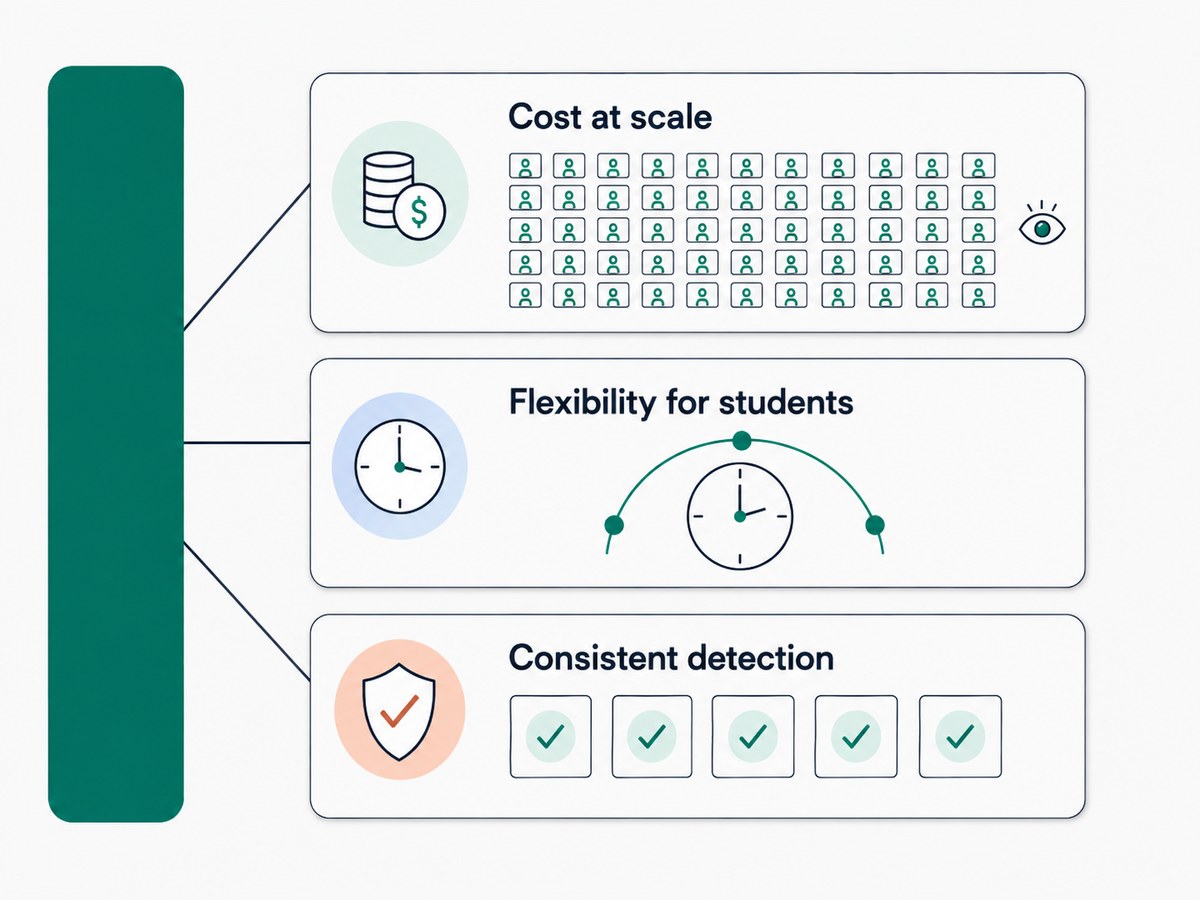
- Cost at scale - running thousands of exams through live proctors gets expensive fast; automated systems make high-volume testing financially realistic
- Flexibility - students can test whenever they're ready, without needing to coordinate around a proctor's availability
- Consistency - the same detection logic applies to every session, rather than depending on how attentive an individual proctor happens to be at 2am on their tenth student of the shift
The trade-off is real, though: automated systems generate a meaningful share of flags that turn out not to be genuine issues, and if there's no human reviewing those flags before they reach an instructor's inbox, that review burden just shifts onto your staff instead of disappearing.
Where Live Proctoring Wins
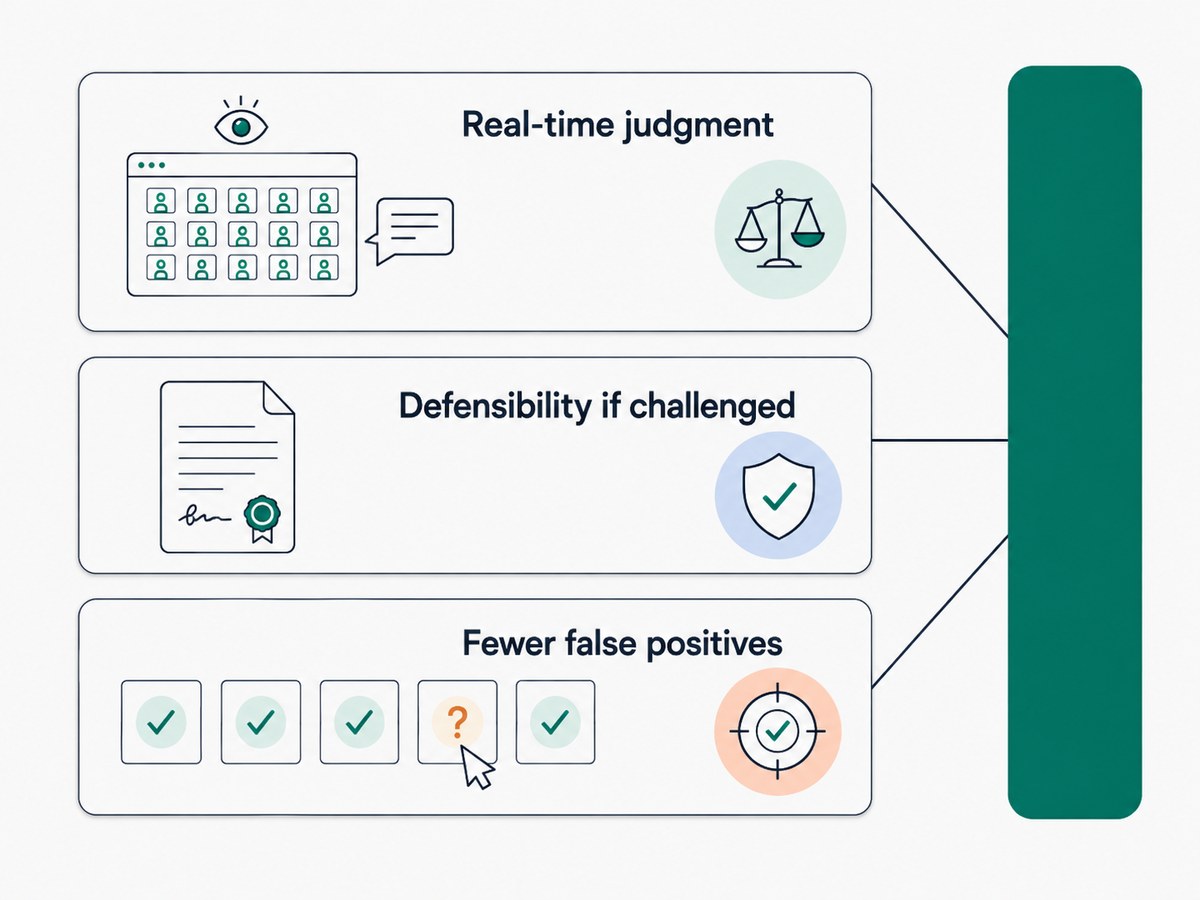
- Real-time judgment - a human proctor can distinguish context in the moment in a way software can't, and can intervene before an issue escalates rather than flagging it after the fact
- Defensibility - when a result is challenged, "a trained person watched this happen" tends to hold up better than "the algorithm flagged it," particularly for high-stakes exams like professional licensing
- Lower false-positive load - a human isn't confused by a pet walking through frame the way an algorithm sometimes is
The trade-off here is attention. A single proctor often watches several students simultaneously, and divided attention means it's possible for one student's issue to go unnoticed while the proctor is focused elsewhere.
Cost and Scale: The Real Deciding Factor
For most institutions, the choice comes down to a simple tension: live proctoring is more defensible per exam, but automated proctoring is the only realistic option at high volume. A university running finals week across tens of thousands of students can't staff enough live proctors to watch each one, the math doesn't work. A licensing board certifying a few hundred professionals a year can afford to, and the stakes of getting it wrong are high enough to justify the cost.
This is exactly why hybrid models exist, and it's the model TunnelQuiz is built around: automated checks run through every proctored session (with AI face detection on Pro), and flags go to a human reviewer by default rather than making institutions choose between "cheap but less defensible" and "defensible but unaffordable at scale."
Accuracy: Neither Model Is Perfect
It's tempting to assume live proctoring is simply "more accurate" since a human is watching. In practice, both models have failure modes:
- AI proctoring can flag a meaningful percentage of sessions that turn out to be false positives, especially in poor lighting or unusual but legitimate environments
- Live proctors, watching multiple students at once, can miss genuine issues simply because attention is divided
- Neither model replaces the value of a documented, structured review process after the exam, that's what actually makes results defensible, more than which model flagged the activity in the first place
For a deeper look at how AI specifically distinguishes normal behavior from something worth flagging, read How Does AI Proctoring Detect Cheating?
Conclusion
Online (AI) proctoring and live proctoring solve the same problem, exam integrity at a distance, through different trade-offs: automated systems scale cheaply but generate false positives, while live proctors offer real-time judgment but cost more and don't scale as easily. Most modern programs land somewhere in between, using a hybrid approach rather than picking one model exclusively.
Frequently asked questions
Is live proctoring more secure than online AI proctoring?
Not automatically. Live proctoring offers real-time intervention and stronger defensibility for high-stakes exams, but it's limited by how many students one proctor can watch attentively at once. Security in either model depends heavily on the specific implementation, not just which category it falls into.
Which is cheaper, AI proctoring or live proctoring?
AI proctoring is substantially cheaper per exam, often costing a few dollars per session compared to live proctoring, which typically involves paying for dedicated proctor time. This cost gap is the main reason high-volume programs default to automated proctoring.
Can I use both AI and live proctoring together?
Yes, this is called hybrid proctoring, where AI continuously monitors the session and automatically alerts a live proctor to join if something is flagged. It's increasingly the standard approach for programs that need both scale and real-time human judgment.
Does live proctoring require scheduling in advance?
Usually, yes - because a human proctor needs to be available at a specific time, live proctoring typically requires booking a slot in advance, unlike automated proctoring, which is often available on demand.
Which type of proctoring is used for professional certification exams?
High-stakes certification and licensing exams frequently use live or hybrid proctoring rather than AI-only monitoring, since the consequences of an incorrect outcome are more severe and defensibility matters more. Lower-stakes assessments, like university coursework, more commonly rely on automated proctoring alone.